Pages

Friday, April 26, 2013

A New Technology


(Ancient Chinese Inventions)
        Many advancements were made in ancient China, more specifically during the Three Kingdoms era. Advancements were made in economy, government, and the military. Many new weapons were created or enhanced, one of these enhanced weapons in the Three Kingdoms era was the repeating cross-bow (above). The repeating cross-bow is a more technologically advanced cross-bow, as it has the ability to fire off ten arrows with one pull of the trigger, compared to the previous version of the cross-bow which could only shoot one at a time (The Greatest Inventor).
        Zhuge Liang was the mastermind within the development of the repeating cross-bow. He created the new piece of weaponry during the early years of the Three Kingdoms era in the Shu Kingdom. Over time from multiple wars and trade, the repeating cross-bow spread to areas around China, such as Korea. However, it eventually grew outdated compared to the evolved weaponry of other civilizations. In the Sino-Japanese War, the weaponry from Japan greatly overwhelmed the repeating cross-bow.
        The repeating cross-bow may not seem important to our lives, but has made a significant difference in weaponry. The repeating cross-bow has enabled the making of rapid-fire weapons, such as the typical machine gun. The ability to repeatedly fire bullets (or arrows) has brought many advancements and innovations to the modern military world. The cross-bow was the ancient Chinese form of a gun, and the added feature of repeating arrows gave way for a whole new style of warfare. Without the repeating cross-bow, modern-day humans would still be fighting with muskets and reloading after only a single shot.

Works Cited

Articles
  
The Greatest Inventor in Ancient China - Zhu Ge LiangMysteriousChinaBlog.  January 15,2013.  April 25, 2013. http://www.mysteriouschina.com/the-greatest-inventor-in-ancient-china-zhu-ge-liang/

Three Kingdoms Period. TravelChinaGuide.com. January 6, 2013. April 25,  2013.  http://www.travelchinaguide.com/intro/history/three_kingdoms/

Pictures

Ancient Chinese Inventions. N.D. http://www.inventchina.org/chinese-inventions-crossbow

Book Drum: Beyond the Page. N.D. http://www.bookdrum.com/images/books/117572_m.jpg

China Travel Go. N.D. http://chinatravelgo.com/wp-content/uploads/2012/02/china_physical_relief_and_topography_map.jpg


The History Blog. N.D. http://www.thehistoryblog.com/wp-content/uploads/2012/07/5.3-foot-bronze-horse-three-kingdoms-tomb.jpg

Huiling Mausoleum and Zhuge Liang Memorial Temple of the Three Kingdoms (220-280). N.D. http://www.china.org.cn/images/114624.jpg

The Secret World of History. N.D. https://blogger.googleusercontent.com/img/b/R29vZ2xl/AVvXsEg88jTyfBhI1CMoReX5-6wiI7ZyUtgVc4s6ksRLndkuvP7pwvuUAA5eGT8XInBoLYfM_dgJJUPn5yOyrhyxj0hy_Mvut3LgHJNtaHujJFcS8DdOlOXqIBEAOHKEv81iCoVWjWV0_DyJ-VAz/s400/zhuge-liang_a.jpg

Three Kingdoms Period Map. N.D. http://www.chinatouristmaps.com/assets/images/chinamaps/Three-Kingdoms-Period-Map.jpg

Thursday, April 25, 2013

Picture Collage

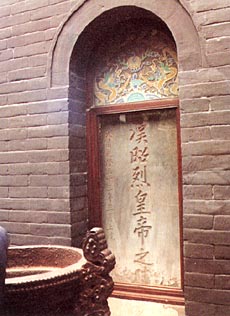
(Huiling Mausoleum)
This image reveals the tomb of Liu Bei in Huiling.
Liu Bei was the founder of the Shu Kingdom and its first ruler.
The picture is of his burial site.

(The Secret World of History)
The image shows one of the most famous people during the Three Kingdoms.
Zhuge Liang was a chancellor of the Shu Kingdom and he is thought of today as
the greatest and most accomplished strategist during his time.


(Book Drum)
This is a building in the modern day city, Suzhou.
Suzhou is located where the Wu Kingdom would have
been. It demonstrates the growth of the Wu Kingdom
from the third century to the twenty-first century.

(China Travel Go)
The map above shows the geography of China,
particularly the territory of the Three Kingdoms. The map
shows the difference of the geography of the individual
kingdoms. The Wei has the desert in the north, the Shu has
the mountains in the southwest, and the Wu has the lowlands,
rivers, and the ocean in the southeast region of China.


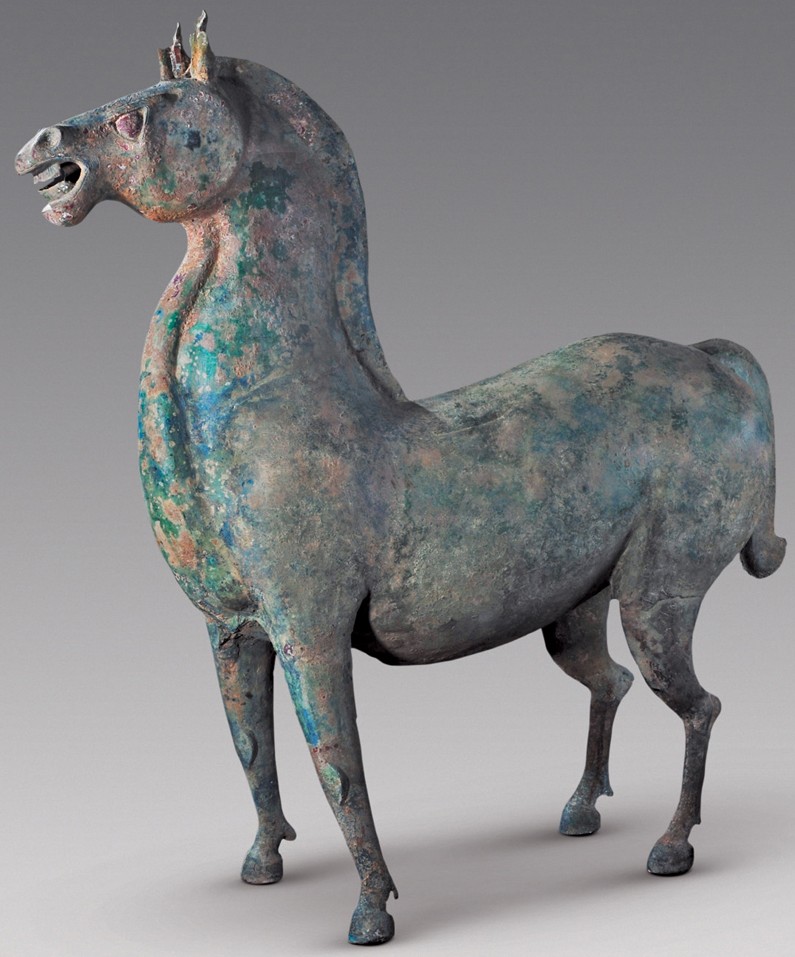
(The History Blog)
This horse was found in the tomb of a warrior from the
Three Kingdoms. It is supposed to represent the warrior's
horse that he road into battle. The horse signifies the conflict
between the kingdoms because of its intimidating facial expression.

Opinion Article

      Ancient China was filled with conflict in the Three Kingdoms. Wars and violence was abundant between the Wu, Wei, and Shu Kingdoms. There were intense rivalries among the kingdoms for the control of China. However, the rivalries did not only bring competition in war, but also competition with the wealth and economic status of each kingdom. Many inventions and advancements were created and designed during the era of the Three Kingdoms. Therefore, the ever-lasting conflict and rivalries in the Three Kingdoms period was beneficial to the growth within China. Each kingdom was competing with each other to become superior in military and economic strength. Innovation was a lead topic within the kingdoms, along with war.
      Even though the conflict arisen between the Three Kingdoms almost isolated them from the outside world, it gave each kingdom a motivation to be superior to the other. There were a multitude of  battles within China between the Wu, Wei, and Shu Kingdoms. This caused many military inventions to be created. One of these such inventions was the repeating cross-bow, a wider example of the general cross-bow that can shoot up to ten arrows with one pull of the trigger (The Greatest Inventor). Many advancements in government and the economy were made also. For example, the Shu Kingdom created a government ruled by law with strict social order and shipbuilding was greatly increased (The Three Kingdoms). These two advancements prove that the conflict and rivalries between the kingdoms improved growth within China.

Wednesday, April 24, 2013

Map of the Three Kingdoms


      In this map you can see a visual of what the Three Kingdoms looked like, i.e. the size and shape. The northern kingdom is the Wei Kingdom, the largest of the Three Kingdoms, which is outlined in red. The next largest was the Wu Kingdom, located in the southeast, and outlined in blue. The Shu Kingdom is outlined in yellow in the southwest. The kingdoms are all centered in eastern China, known as China Proper. China Proper is the origin of Chinese civilization, as there are many rivers with fresh water and lowlands with fertile soil. The rivers gave the people water to drink and the fertile soil was ideal for farming. The ocean is also a factor in China Proper because it opens the opportunity for fishing. To the north, however, is the Gobi Desert, which the Wei Kingdom comes into contact with, and to the southwest in the Shu Kingdom are the higher elevations that eventuate into the Himalayan Mountain Range. The Wu Kingdom has the majority of the fertile soil, rivers, and the coastline compared with the Wei and Shu Kingdoms.

Thursday, April 11, 2013

News Article

The Beginning

Written by TH

        In ancient China, there was a period of division among the empire from 220 AD to 280 AD. Three dynasties controlled China during this era of separation: the Wei dynasty, the Wu dynasty, and the Shu dynasty. The Wei dynasty ruled northern China, the Wu dynasty ruled in the southeast along the Atlantic Ocean, and the Shu dynasty hailed in the southwest region of China to make divide the empire into almost even thirds. This era of ancient China is known as the Three Kingdoms.
    The Three Kingdoms formed after around twenty years of inner conflict and civil war in ancient China. The conflict arose as the young Emperor Shao came to power due to the death of Emperor Ling in 189 AD. Emperor Ling was the last emperor of the Eastern Han dynasty to experience internal peace of China, because Emperor Shao did not have a strong hold over his empire and there was much conflict that resulted from manipulation in the government. Dong Zhuo was the government official given the credit for dethroning Shao and giving the power to Emperor Xian.
    Over the next seven years, Dong Zhuo was killed from mutiny and China seemed as if it had been broken into different sections. However, there were two major divisions that had distinct advantages over the others. Those divisions were ruled by Cao Cao and Yuan Shao. In 201, the Battle of Guandu took place where Yuan Shao was defeated by Cao Cao and the northern area of  China was unified under Cao Cao. He continued his conquests toward southern China, but was brought to a halt by Sun Quan and Liu Bei at the Battle of Red Cliff. This assisted in the formation of the Wei and Shu dynasties.
    The official beginning of the Wei dynasty was in 220 when Cao Cao's son Cao Pi became emperor and took the national title of Wei. The Shu dynasty began as Liu Bei gave himself the title of emperor and took the national title of Shu in 221. The year 222 was the year that began the Wu dynasty, ruled by Emperor San Quan. Thus began the era of the Three Kingdoms. The next sixty years were filled with battles and innovation. Each kingdom had their own improvements and advancements with the use of available technology and there were thrilling battles throughout the era of the Three Kingdoms. (The Three Kingdoms)